
Inductees include players, administrators, coaches, and contributors whose dedication, success, and service have helped shape bowls in New Zealand.
Selection into the Hall of Fame reflects not only competitive achievement, but also leadership, innovation, and long-term contribution to the bowls community.
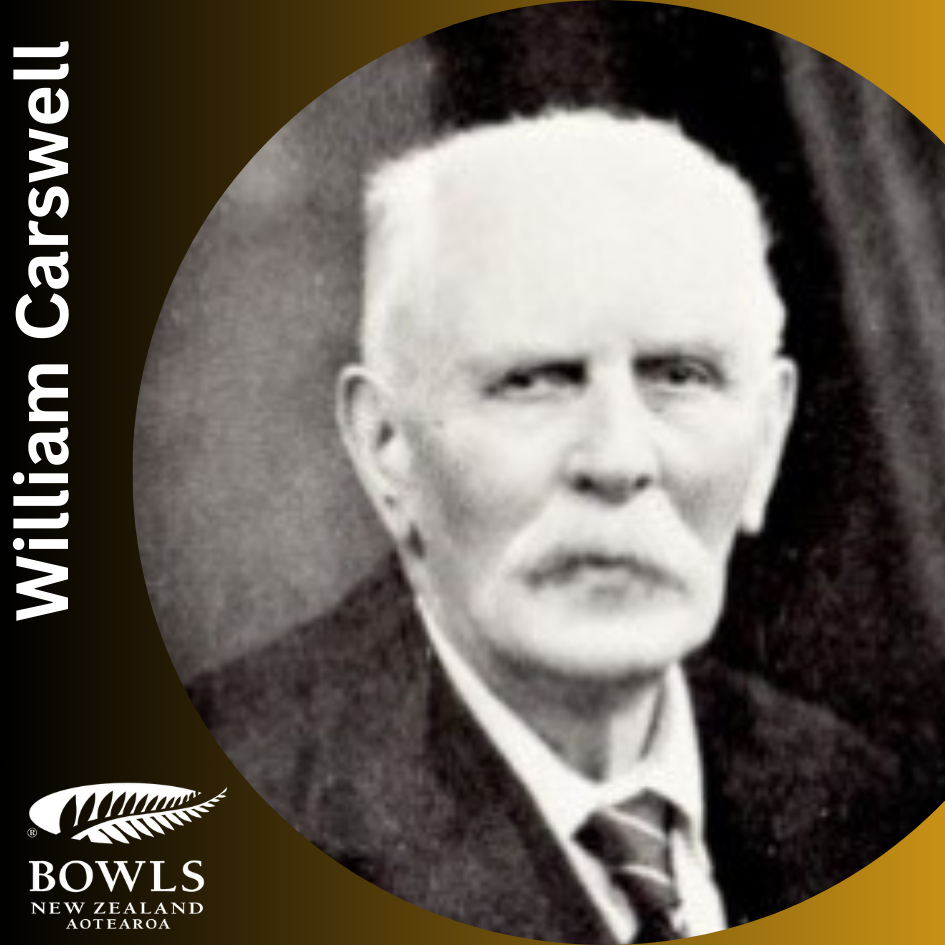

William Carswell won an amazing number of titles during a remarkable 66 years as a competitive bowler, all this time a member of the Taieri bowling club in Dunedin where he joined in 1888. William won 13 national titles over a forty- six year period between 1888 and 1934, 10 years of which he gave-up playing bowls to give his attention to greyhound coursing and playing draughts.
A keen student of the game, his stance on the mat and his method of delivery, referred to as the "pendulum" stance, prompted another New Zealand champion Jack Best (singles and twice lead in the fours), to write a book entitled "The Carswell System".


Anne’s debut year saw her in the role of skip for the Women’s Fours in Kuala Lumpur, Malaysia for the 1998 Commonwealth Games.
The team missed out on a medal in Kuala Lumpur but the desire to win was there and Anne, again taking the skip position, led a strong team to the 1999 Asia Pacific event.
The women’s team took the gold medal in both the disciplines of triples and fours. Held in Bukit Kiara, Malaysia, Anne along with Sharon Sims and Patsy Jorgensen (triples) and Jan Khan (fours), contributed significantly to New Zealand holding the Overall Trophy for the 1999 Asia Pacific competition.
With strong momentum from the Asia Pacific win the year before, the 2000 World Champs in Moama is where Anne would achieve her second double gold medal haul, again in the triples and fours.
Anne shared this momentous occasion playing alongside Sharon Sims and Patsy Jorgensen (triples) and with Jan Khan (fours).
Back in Moama for the 2001 Asia Pacific competition Anne’s team were denied their hat-trick of double gold medals by Australia.
With Marlene Castle and Patsy Jorgensen, Anne took home the silver medal in the triples.
A feat repeated in the fours with Jo Edwards, Sharon Sims and Patsy Jorgensen.
In 2002 Anne represented New Zealand at the Commonwealth Games for a second time. Playing alongside Jan Khan, Patsy Jorgensen and Wendy Jensen the New Zealand four achieved a Commonwealth Games bronze medal.
At the end of 2002, Anne retired from international competition.
Anne’s contribution to the sport of bowls is not just four very busy years on the international stage from 1998- 2002.
Belonging to a small club in the Counties Manukau centre, the Hunua Bowling Club, on the domestic scene, Anne achieved 15 Counties Manukau centre titles and holds in excess of 40 club titles.
Anne was known by her community and her peers to ‘live for bowls’. If she was taking part in national events or helping the new bowlers in her club her attitude and passion was the same.
Anne lead by example, she was focused and took control but it was always about the team and their fight right to the end.
With her fellow competitors and officials her sporting manner was exemplary, on and off the green she was a positive force.
Anne’s commitment to her sport, training hard and with purpose, spending hours on the green and her ability to lead while under pressure culminated in an extremely successful lawn bowls career.
International Titles
World Bowls 2000: Gold Medal in Triples and Fours
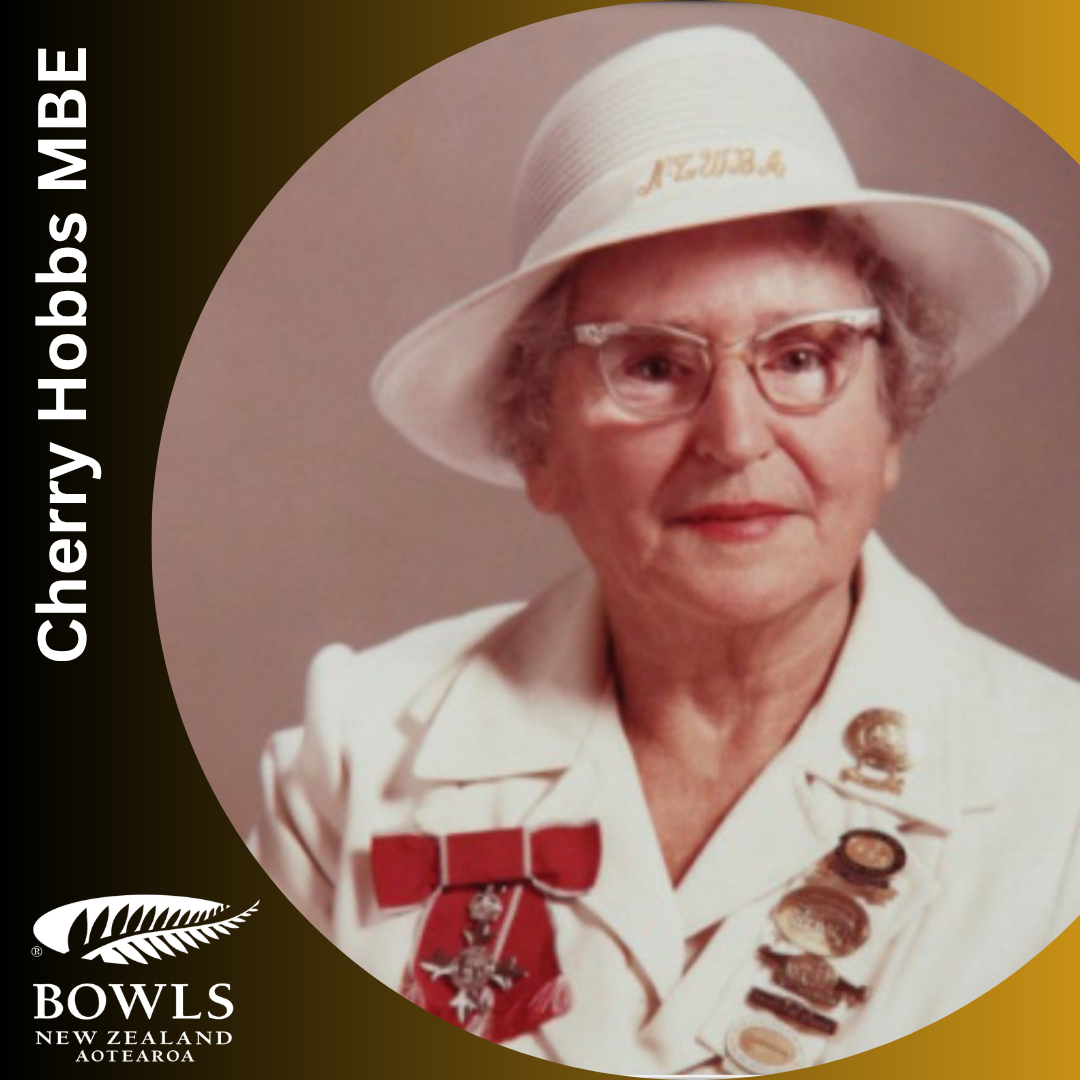
She was a dominion councillor 1960-1974 and President of NZWBA in 1969-70.
In 1977 she was awarded the MBE for her service to bowls.
She became one of New Zealand's most successful woman bowlers.
She started at the Port Ahuriri club in Napier, but most of her success came as a member of the Marewa club of which she was a foundation member and where she served a number of years on the committee including a period as President.
She won in excess of 60 club titles and 53 centre titles.
In addition to her gold medal winning efforts in the 1973World Championships she also won silver in 1977 in the triples.
She was awarded an MBE for service to bowls in 1974 and was inducted into the NZ Sports Hall of Fame in 1996.
National Open and International Titles
National Singles: 1965,1968,1973
National Pairs: 1957, 1958, 1959, 1965, 1984
National Fours: 1958, 1959, 1961, 1963, 1968, 1977, 1978
National C of C Singles: 1957, 1967
World Bowls 1973: Gold Medals in Fours and Triples
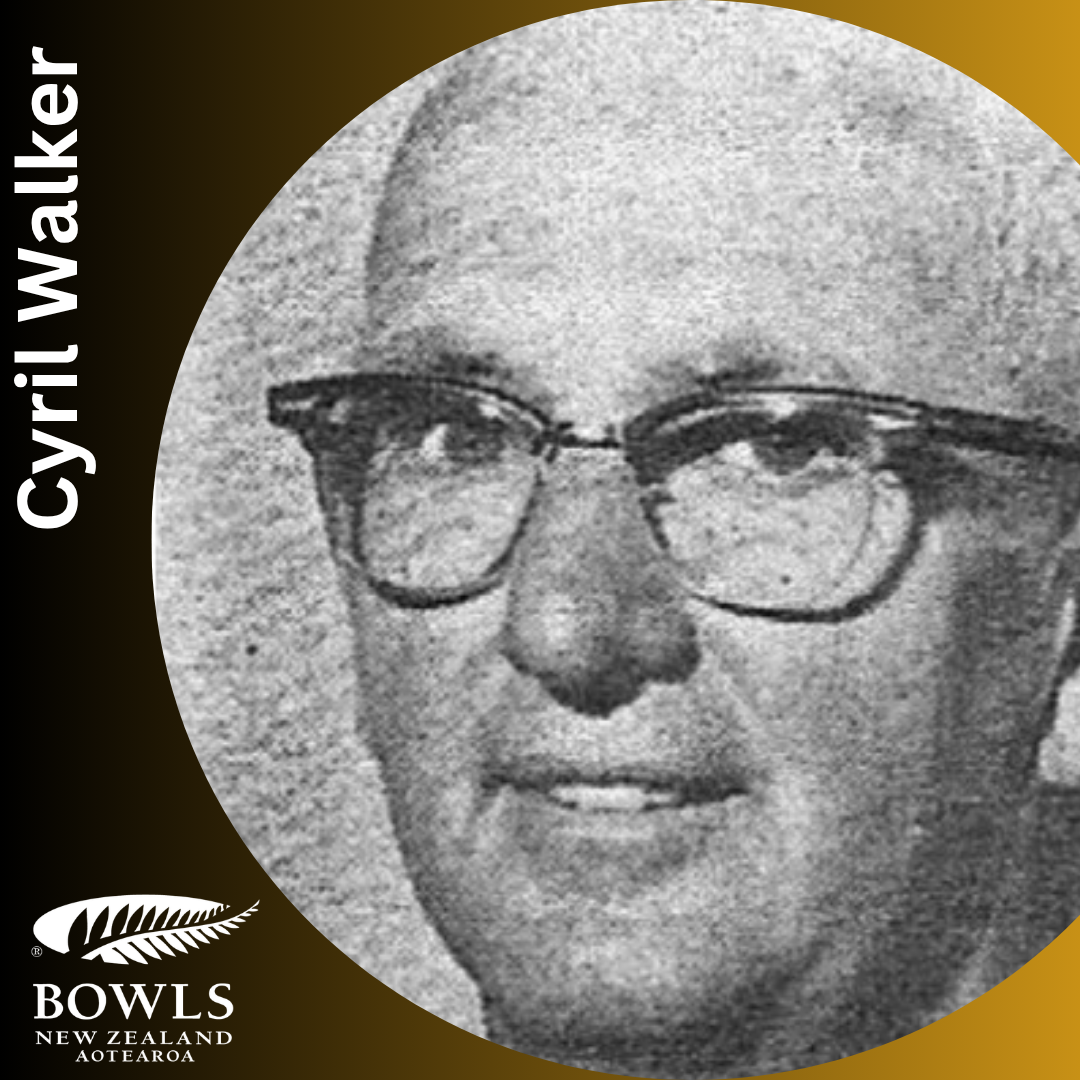
His main contribution to bowls was in administration. Apart from being President of both clubs, he was on the Manawatu Centre Executive for27 years, being President for seven of them.
He was an NZBA Councillor for 12 years, the last two of which he was on the committee dealing with international bowling laws.
He was a NZ Selector for 3 years and managed the Men's team in 1972.
Cyril's main contribution however was his 25 years of work with the New Zealand Sports Turf Institute (NZSTI), which he was instrumental in establishing, to ensure top quality playing surfaces throughout the country.
He also organised many seminars on green keeping which were attended by interested parties from various sports in NZ and overseas.
In 1976 he was awarded an NZBA Long Service Medal.
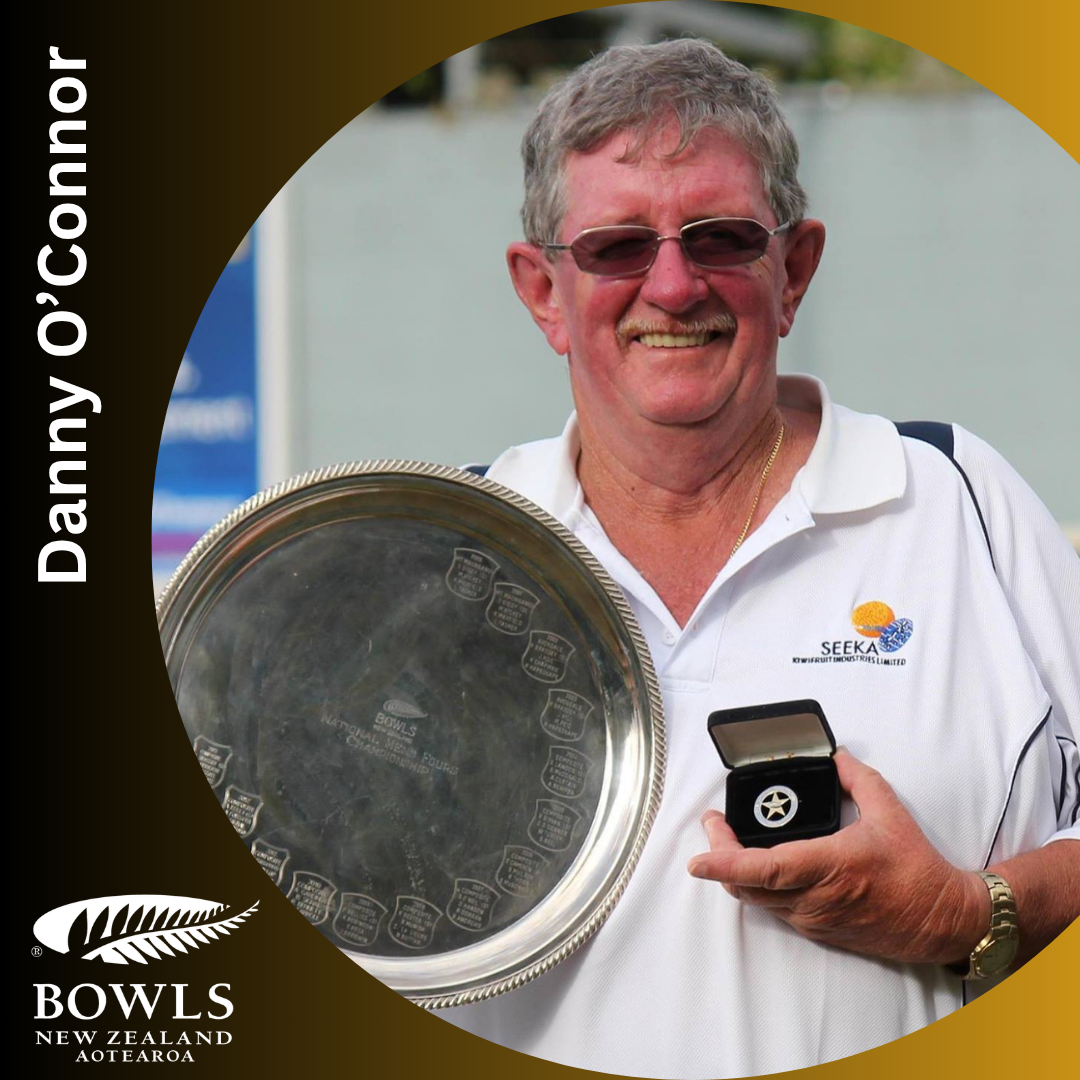
He played for New Zealand and won a Silver Medal at the 1982 Commonwealth Games.
Danny was a member of the famous Okahu Bay Bowling Club for50 years and in that time earned the respect and admiration of bowlers all around New Zealand, and beyond.
This respect and admiration was clear in the large number of attendees to his posthumous induction into the Hall of Fame.
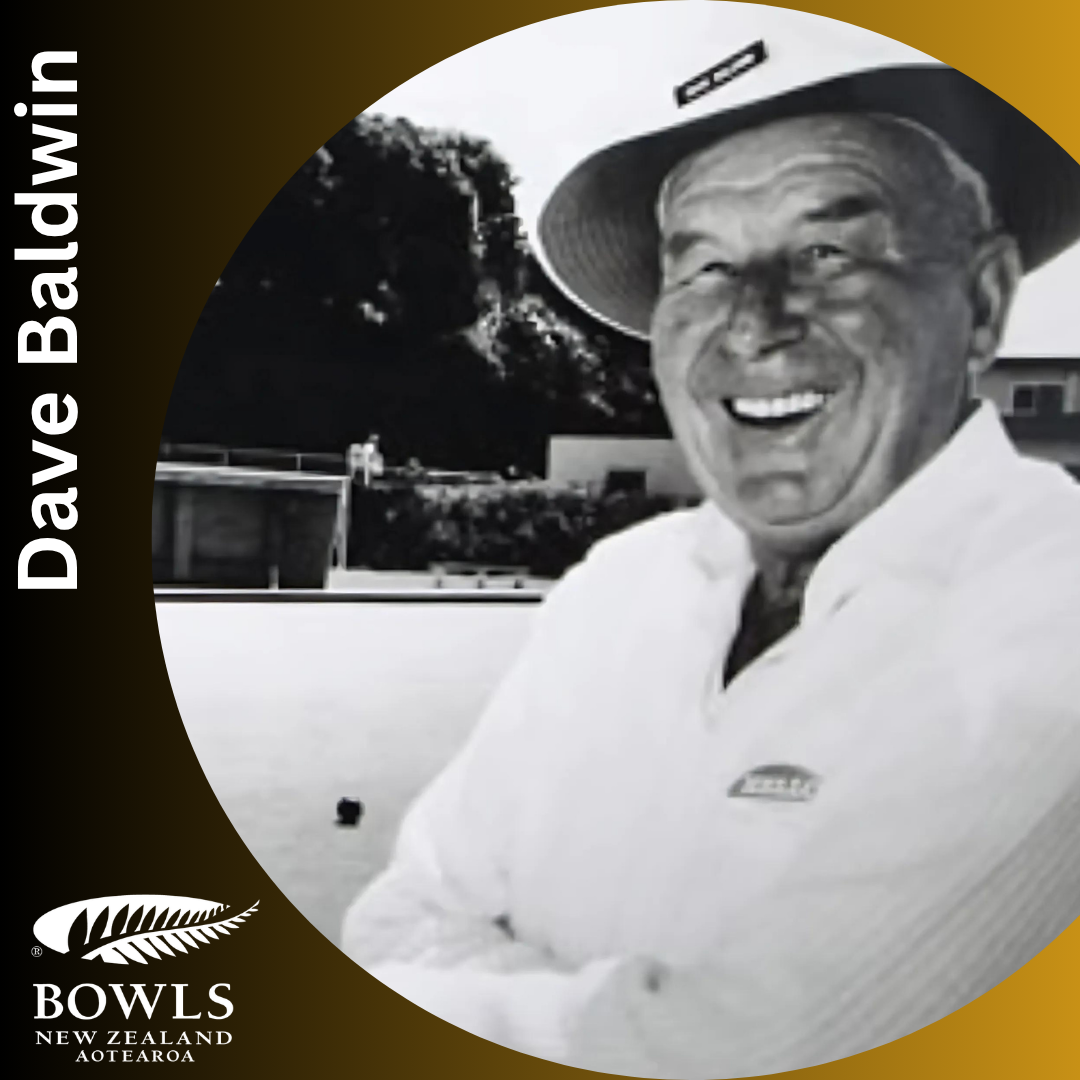
As well as being a very competent bowler he was also very keen to pass on his knowledge to his fellow bowlers.
He was active in club administration having held the positions of Secretary and President of his club.
He is recorded as having won 13 club and 7 centre titles,and also as having won a Silver medal in the Fours at the Commonwealth Games of1978.
National Open and International Titles
National Singles: 1971
National Fours: 1972, 1974
Commonwealth Games 1974: Gold Medal in the Fours
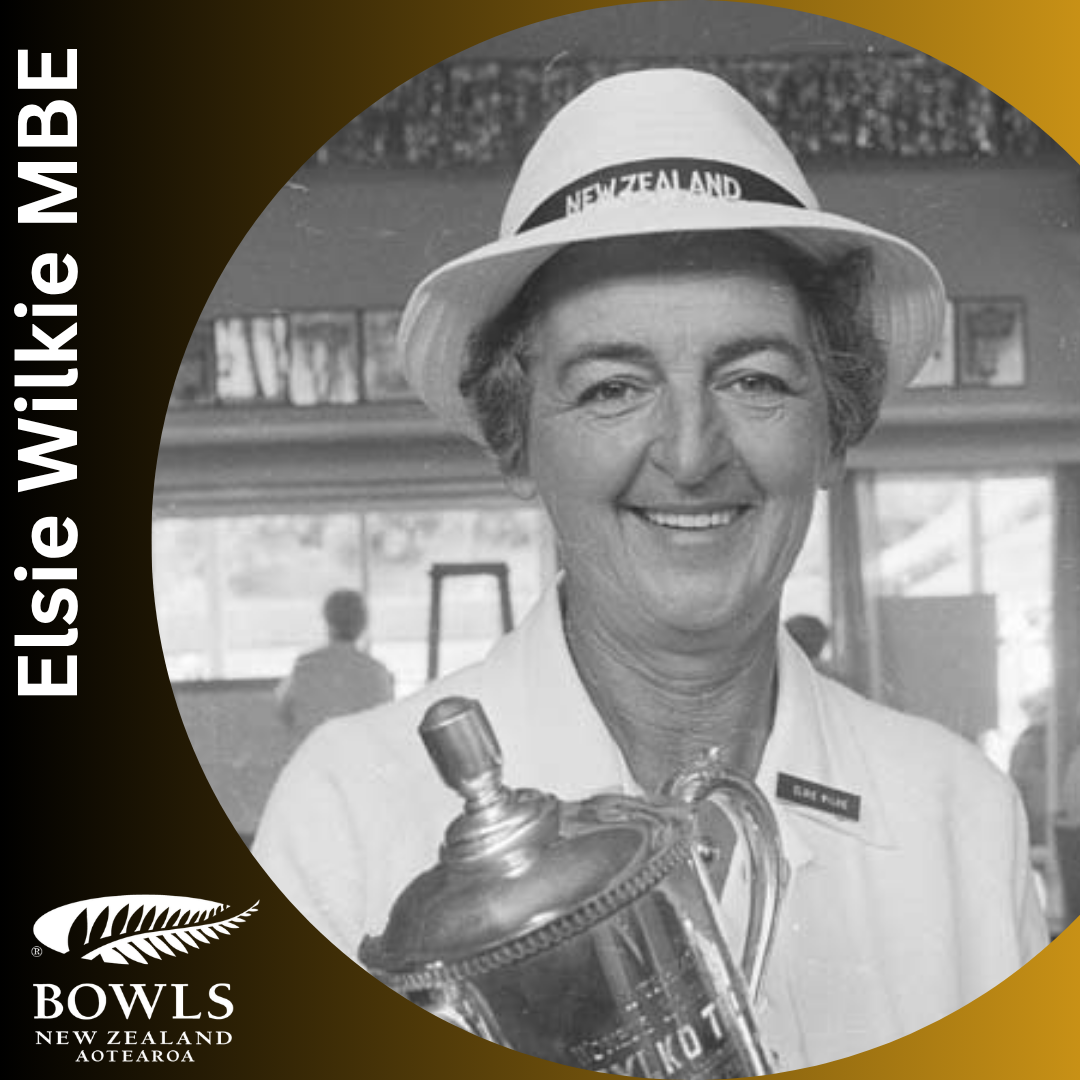
While she took up bowling later in life she became a very competent practitioner of her sport.
Elsie served on her club's executive and was a Waikato and New Zealand selector. Her directness and honesty as well as feeling for her opponents made her very popular with both club-mates and rivals on the green.
Her humility and modesty was reflected in the fact she was always taken a back by the many people who seemed to know her and spoke to her in the street.
She had her own natural style and was never coached.
Elsie was awarded an MBE for services to bowls in 1978 and was inducted into the NZ Sport Hall of Fame in 1990.
She won 50 club titles and holds a Waikato Gold Star and bar.
National Open and International Titles
National Singles: 1966, 1970, 1971, 1976
National Pairs: 1969, 1980
World Bowls 1973: Gold Medal in the Singles
World Bowls 1977: Gold Medal in the Singles
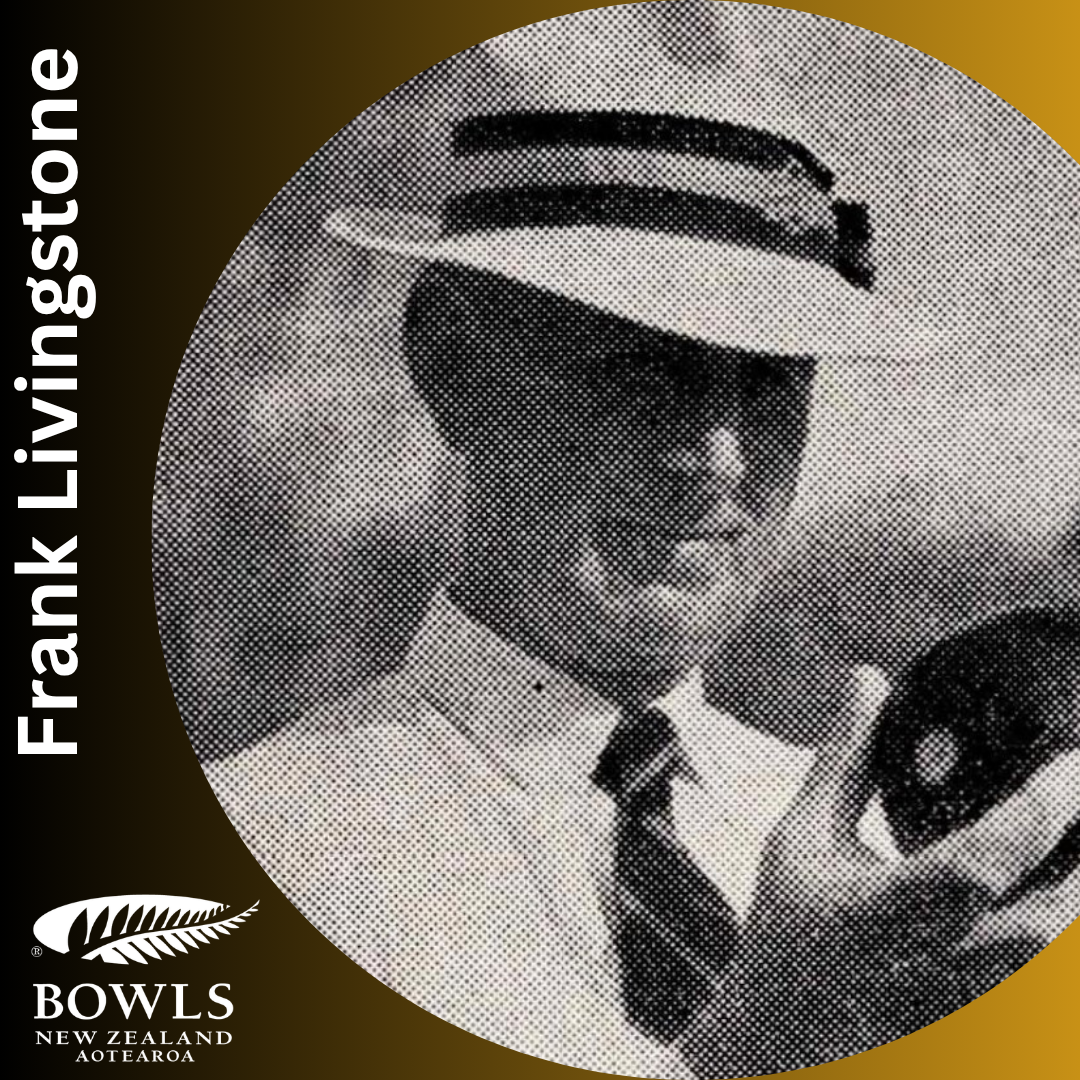
He won five National titles over the period 1936 to 1962 and in 1938 won the Australian singles championship.
He represented New Zealand at the Empire Games in 1938 where he won a Silver medal in the singles.
National Open Titles
Singles: 1936, 1952
Pairs: 1949, 1962
Fours: 1940
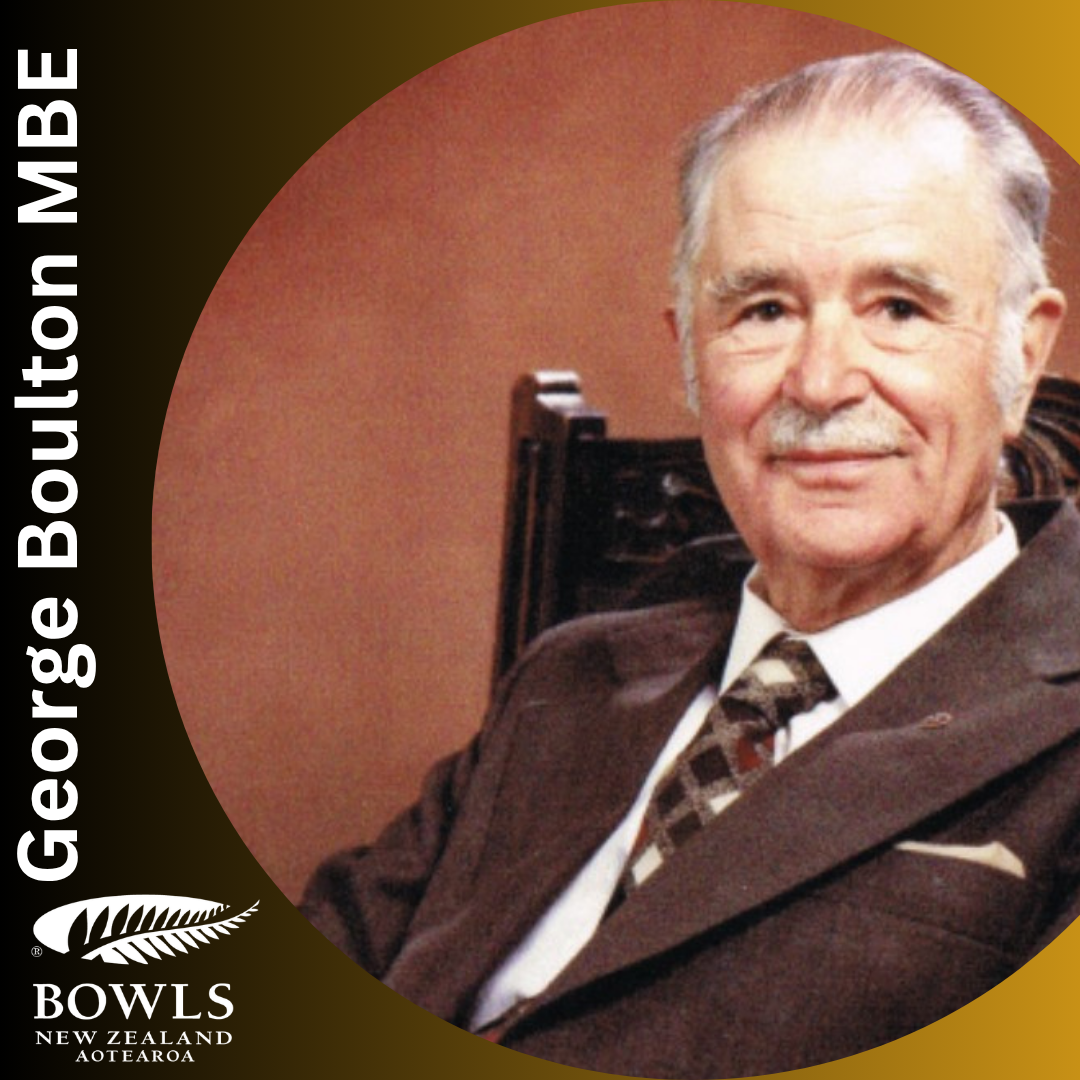
He was President of his club in 1951-52 and was made a life member in 1960 and Patron in 1970.
He was the President of the Wanganui Bowling Centre during the period 1948 to1950 and was made a life member in 1966.
He managed the NZ Men's Team in 1957 and again to the Empire Games in 1958.
He was President of the NZ Bowling Association in 1966-67 and was made its first life member in 1972.
He was the President of the International Bowling Board for the period1968-1970 and was made a life member in 1970.
He was awarded and MBE for services to bowls in 1972.
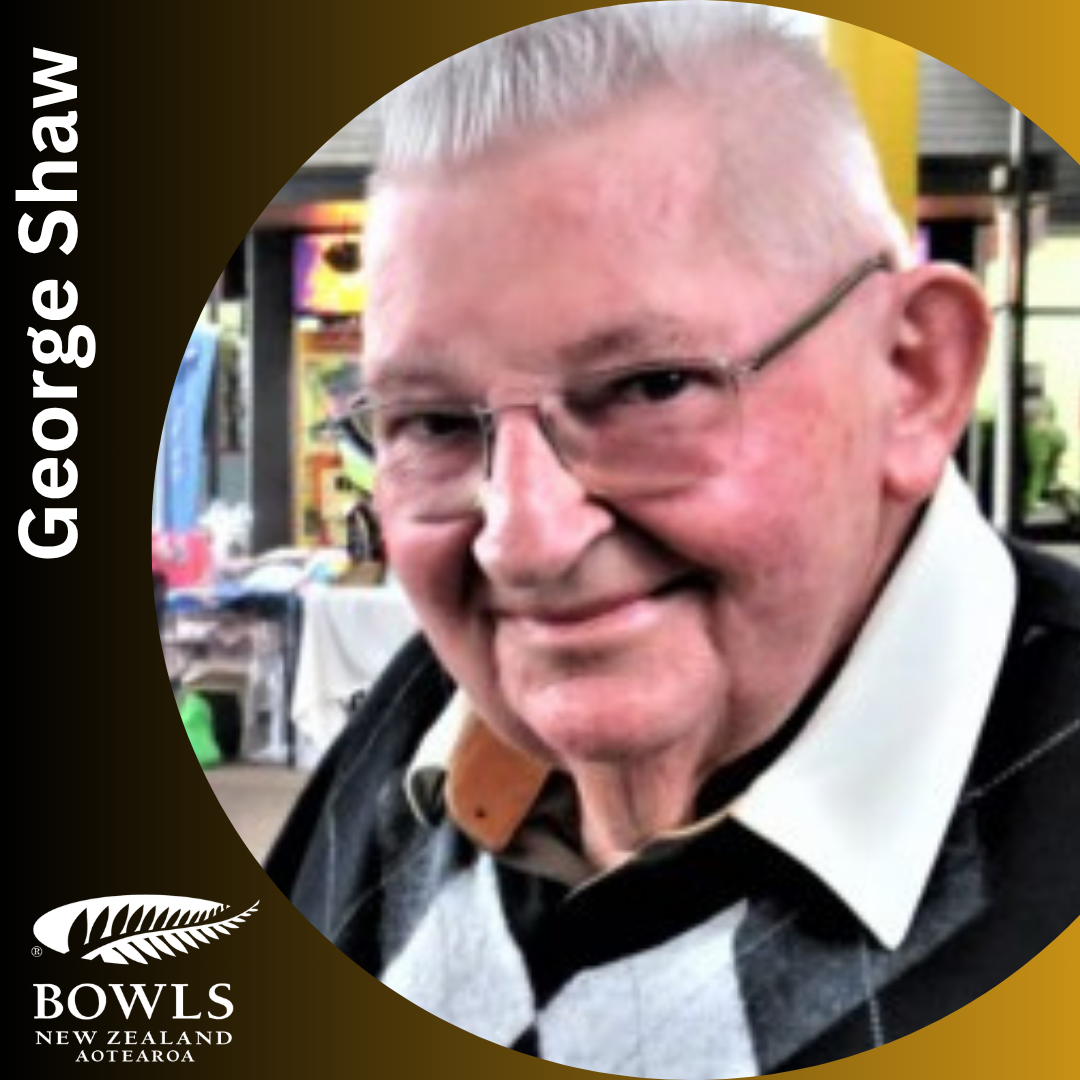
Sure … he had thrown his hat in the ring. But for an Antipodean to be considered for the top job in English Bowls was drawing a longbow. Particularly when he later found that 124 people had applied for the job.
“It was going to be a huge adventure not only for me,”recalls George, “But for my wife Donna, and our daughter Annemaree who was in the 6th form at Epsom Girls Grammar. Our son Jason and his wife Rachel had already planned to do their OE in London in 1996.”
By Christmas, George and family had left New Zealand and setup a new home in Worthing, England where the headquarters of the English Bowling Association was located.
The exciting adventure in England was to become another of the great administrative contributions that George Shaw made to the game of bowls … locally, nationally and internationally.
Whilst bowls has been George’s sporting love for many years,it wasn’t his first sports love, nor even his second. George was a cricketer and a golfer before he took to bowls. He even played table-tennis on the side.
George was born in Greymouth, but spent his school years in Nelson. “I went off to university in Christchurch where I ended up enjoying too much cricket with the likes of Graham Dowling, Tony Timpson and Peter Morris, when I probably should have been enjoying study. It was fabulous. Even when Gary Bartlett hit me with a 95mph bouncer, and I ended up in Wairau Hospital with a broken wrist trying to fend it off!”
Eventually dropping out, George joined the Bank of New South Wales. At the time It was pretty much a go-to job for young blokes focused on their extra-curricular activities – and for George, it gave him plenty of cricket time. “Despite being transferred to Gore, I was still able to love my cricket. I played Under 23’s for Otago with Keith Campbell … and locally for Southland against cricket greats like John Reid, Bob Blair, Barry Sinclair and Artie Dick.”
As banks did then, he was soon transferred again – this time to New Lynn in Auckland. He joined the Suburbs Cricket Club where Don Taylor, John Kemp and Hedley Howarth played.
“I was only there 5 minutes and the bank transferred me to Wellington,” laughs George. “I was in the ‘Methods and Mechanisation Department’ and I was part of the team that went around the country explaining the introduction of decimal currency to bank branches.” It was 1967, and in-between furloughs away with the bank, George played cricket at the Karori Cricket Club – along with two young blokes called Brian Waddle and John Anderson (who was later to become CEO of the National Bank).
The bank soon transferred George back up to Auckland – where he met his wife-to-be Donna. While he was easing out of cricket, George was immersing himself in golf. He was on a single figure handicap at the Howick Golf Club.
One day in 1976, George took his father Tom to watch the finals of the Bowls National Singles Finals at Onehunga. “Dad loved his bowls. He played at the Northern Bowling Club in Palmerston North with Phil Skoglund. We had a great day at Onehunga. Ivan Kostanich won the final 21-20.”
George was bitten by the bowls bug. And the following year joined the Bucklands Beach Bowling Club. Like cricket and golf before, George didn’t do things in half measures and threw himself into bowls –becoming Chair of the match committee, and Club President in 1984. “I got into the Auckland Centre 1-5 team and eventually the senior team. We won the National Intercentre title in 1992.” George now has a Gold Star for 7 Auckland Centre titles, as well as 2 Waikato and 1 Counties-Manukau title.
In 1988, George started getting really serious about his contribution to bowls administration. He was appointed Deputy Tournament Director for the 1988 Men’s World Bowls Championships at Henderson, and Tournament Director for the Women’s World Bowls Championships later the same year.
In 1989, George was appointed as the first Executive Director of the New Zealand Bowling Association – with a staff of one. Himself!! “I had a modest office,” recalls George, “It wasn’t until1992 that we moved to where we are now at Penrose.”
In 1990, he was the Bowls Media Liaison Officer for the Commonwealth Games being held in Auckland.
But it was probably his work travelling the country with Kerry Clark (then Chair of the New Zealand Bowling Association) and Bill McCormick to sell the amalgamation with the women, that caught the attention of the English Bowling Association. “They were contemplating the same change,” says George. And this, along with the evolution of the association to Bowls New Zealand, offered the 45 members of the English Executive food for thought.
Lots of food as it turned out!
In 1995, George and his family were off to Worthing.
Kerry Clark took over as Chief Executive of Bowls New Zealand. And a Kiwi became head of England bowls.
“It was all much bigger than I had been used to,” says George. “The year I arrived, they had 135,000 men members and 89,000 entrants in their Nationals! And that was down on the previous year. They used to run play-offs in each of the 70 counties in England, and the winner and runner-up in each county sent teams to Worthing. We then played 6-off to get down to 64.”
“But it was the tradition that was astounding,” says George.“I was asked to approve a Presidents match to be held at the Southampton club celebrating its 700th anniversary! That’s 700 years – not70 years!”
As the head of the English Bowling Association, George represented England on the World Bowls Board, the British Isles Bowls Council,and the England Sports Council which was chaired by the Duke of Edinburgh. He became Tournament Director for the Commonwealth Games in Manchester in 2002.
His work raising £500,000 to prepare the England team for the 2002 Commonwealth Games made heads turn. “England won 3 Gold, 1Silver and 1 Bronze. They had only won 3 medals in total over the last 5Games.”
George was presented with a Life Membership of the Manchester Commonwealth Bowls Club and the Worthing Bowling Club, as well as an Honorary Membership of the Wiltshire Bowls Association and the Borough of Worthing.
In 2005, George and Donna ‘retired’ back to New Zealand.
Even then, George kept his hand in – becoming a member of the Zone 2 Regional Advisory Committee in 2005, an Administration Officer for Bowls Counties Manukau in 2010 and a member of the Bowls New Zealand Judicial Committee in 2013.
He was inducted into the Bowls New Zealand Hall of Fame in2013.
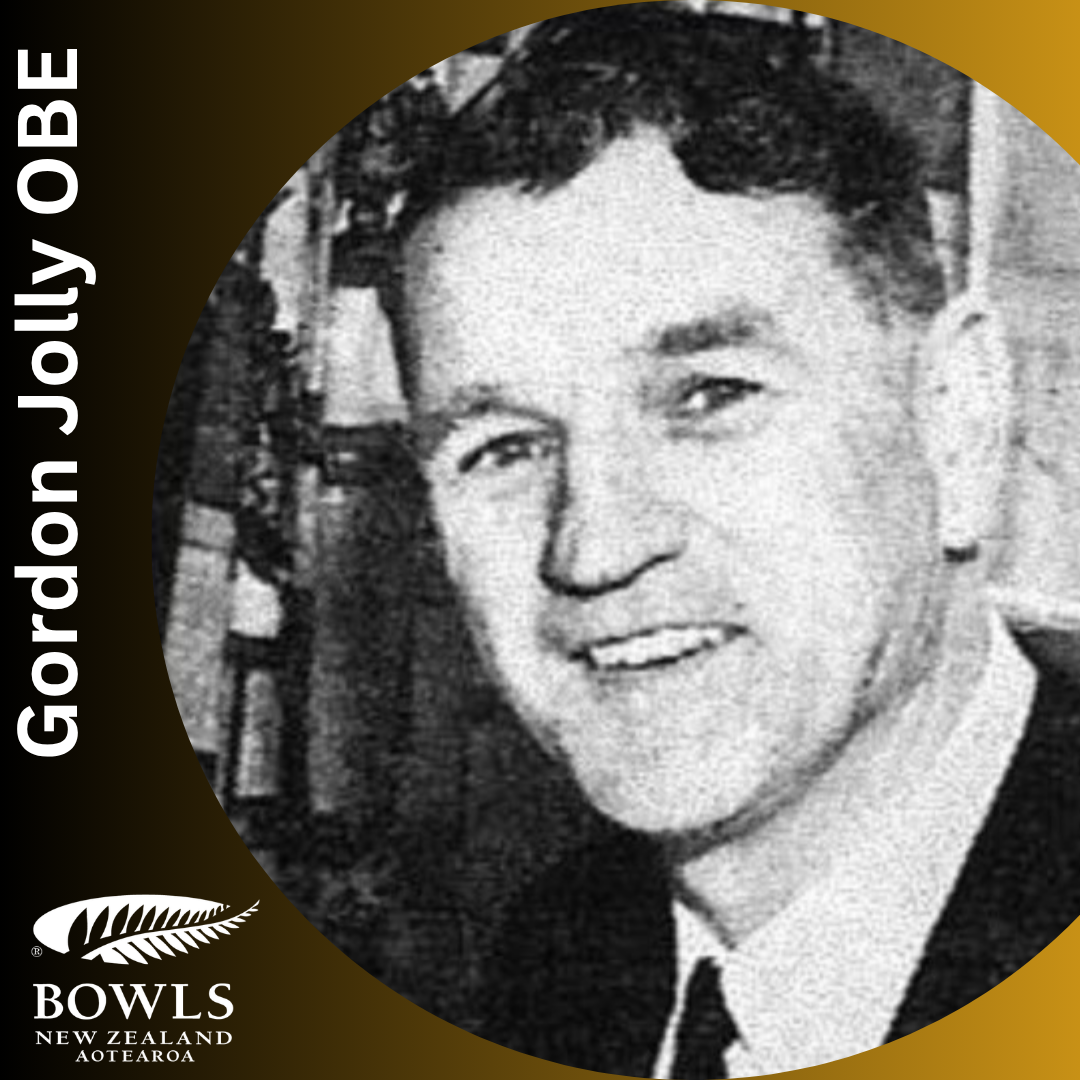
The holder of 18 Dunedin centre titles he was very highly regarded in the sport of bowls as both a player and an administrator and in his era he was "Mr Bowls" in New Zealand.
At national level he was a Life Member, Selector, President1968 and Secretary-Treasurer .
National Open and International Titles
National Fours: 1970
World Bowls 1966: Gold Medal in Fours
Commonwealth Games 1974: Gold Medal in the Fours
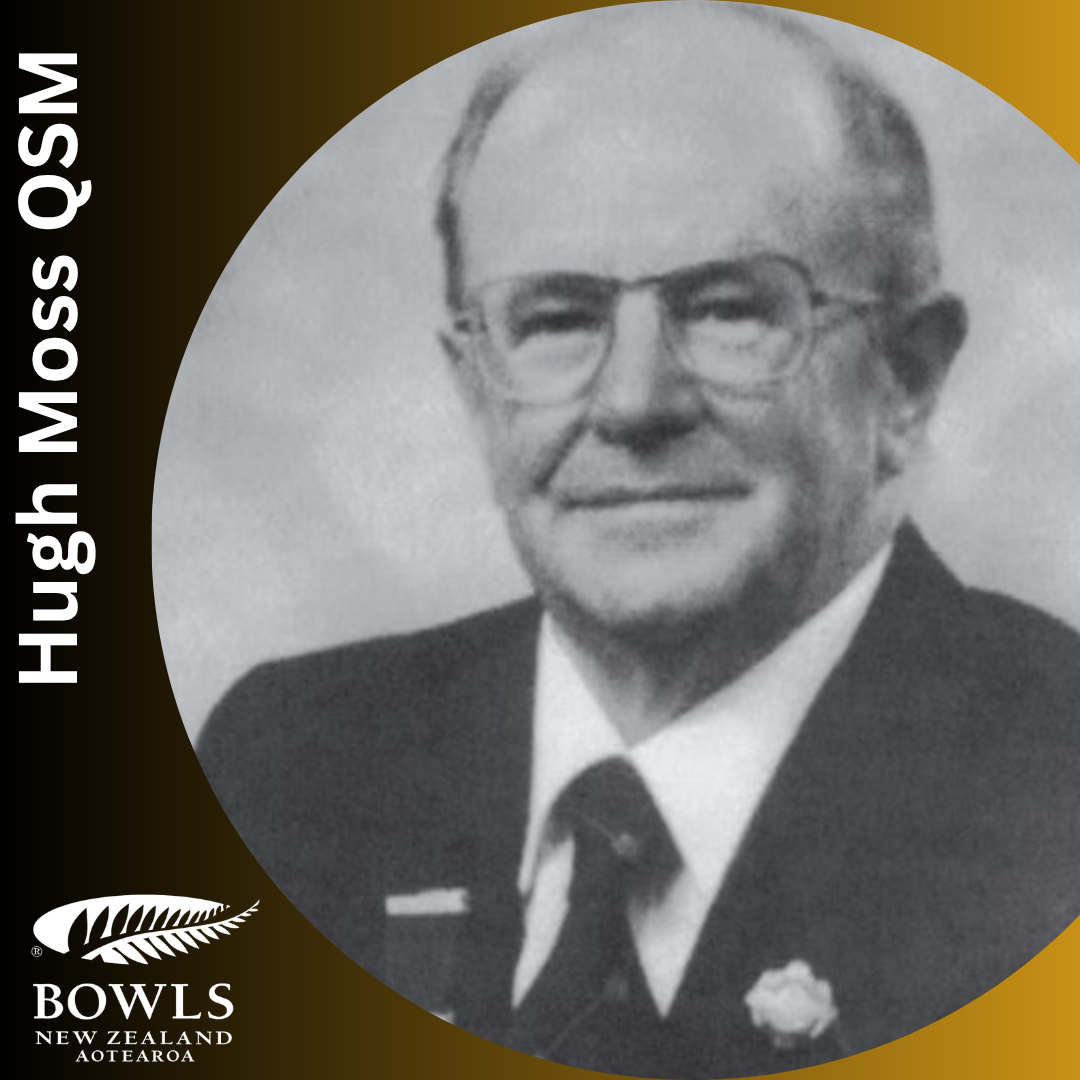
He was President of the NZBA in 1983 and New Zealand's delegate to the IBB in 1980. Hugh was a qualified lawyer and he applied this discipline to the game of bowls in New Zealand.
As bowls gained in popularity it lacked regulation and through his legal training and a perceptive vision of bowling affairs Hugh was able to rewrite the constitutions and rules of the game in a coherent manner at national and centre levels.
He was awarded a Queens Service Medal for services to bowls and the community in 1990.
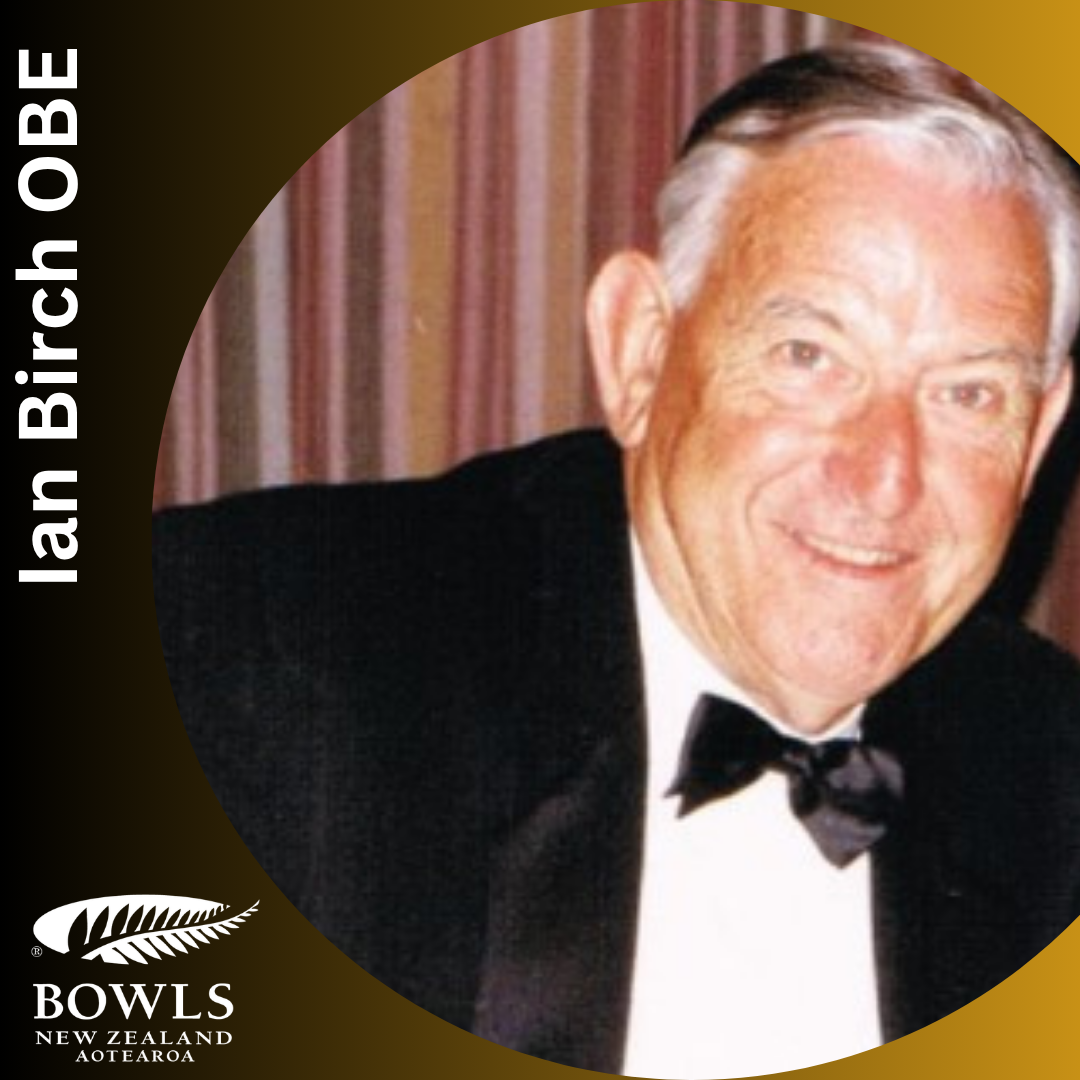
Ian Birch (or ‘Birchy’ as his mates called him) knew that for the game of bowls to survive when it was no longer acceptable for mum to stay at home with the kids while dad played bowls; when it was no longer acceptable for New Zealand to be closed over the weekend; when it was no longer acceptable for bowls to believe it was the only leisure game in town; when it was no longer acceptable for sport to be amateur only; and when it was no longer acceptable for the bowls community to behave like a secret society of druids, then the game had to change.
It did change. And Ian Birch can take a lot of credit for that.
“I first came across Birchy at the Nationals at Onehunga in1976,” says long-time friend Gary Fleming. “He was commentating out of the Rothmans Caravan for ‘Sports Round-Up’. He one of those great voices for radio with his distinctive call sign ‘this is Ian Birch … at the bowls’. And as radio phased out and television phased in, he went on to often share the bowls commentary spot with Doug Armstrong at the likes of the World Champs at Henderson and the Comm Games in Auckland.”
“Commentating was his job,” recalls Gary. “But he also ran Ian Birch Real Estate in Mt Eden. He was a Mt Eden boy through and through. He started at St Peter’s School in Mountain Road just after it opened. It’s where he became life-long friends with the legendary racehorse trainer, and in later years bowler, Colin Jillings.”
“He was a ‘smooth’ talker … not in a bad way ... he just had a lovely voice. It helped him in radio and real estate. I think he was originally in pharmaceuticals … his voice must have helped him get in the door to see doctors as well!”
Long time Auckland bowls colleague, fellow bowls commentator, and mate Kevin Hickland describes Ian Birch as one of the ‘legends of the sport’.
“He was the bloke who introduced ‘money bowls’ here in New Zealand,” says Kevin. “It’s hard to imagine now, but back in the 80’s and even the early 90’s, professionalism in sports was still very much frowned upon. Paying people to play sport was tut-tutted. And certainly people playing gentlemen’s games like rugby, cricket, bowls and athletics weren’t expected to sully themselves by accepting money!”
“Birchy changed that. With the backing of Countrywide,he introduced paid invitational tournaments into New Zealand, showcasing the best of the best from overseas against local stars like Peter Belliss. Even I was a beneficiary of a bit of money in the sport in the early days!”smiles Kevin.
It was a big deal in the bowls community. And in fact,the wider sport community.
“I remember when Birchy brought over the England Lawn Bowls Test Team for a showcase tournament in New Zealand,” says Gary. “They weren’t no slouches … it was David Bryant (perhaps the best ever bowler in the world), Julian Haines, Andy Thomson and Pip Branfield. I think it was1983. It was radical stuff. Heck, it would even be quite radical stuff today.”
“What’s more, the England team loved Birchy too. They ended up asking him to be their manager when they continued their tour across the Tasman at Tweed Heads.”
“The England tour wasn’t a one-off. Birchy brought out Scotland in 1984, Ireland in 1985, and England again in 1986. Each time they played in an invitation-only event for 32 bowlers at his own club,Epsom. It was called the Epsom 5000. They would be playing in coloured clothing and playing with coloured bowls … at a time when clothing only came in white and bowls only came in black or brown.”
“At about this time he became great mates with David Harrison, the Tournament Director of ‘Pot Black’, who was responsible for bringing money into the sport of snooker. Birchy saw no reason why lawn bowls couldn’t do the same.”
“He wasn’t scared of thinking big.”
And it was that big-thinking that put Ian Birch into the top echelons of lawn bowls … at club level, at centre level, at national level and at international level.
“I believe he joined Epsom about 1966,” says Kevin, “And he became one of many great administrators that went through that club. He was a member of the Club Executive from 1969, Club President from 1973, Club Delegate to the Centre from 1974, and later became a Life Member of the club in1987, Chair of the Club Board in 1997 and Chair of the Centennial Committee in2005.”
“However, it was at centre level where I had a lot of contact with Birchy. I don’t think he was ever on the board of Bowls Auckland, but he was on the executive of the Auckland Bowling Association from about 1974. He was also an Auckland Bowls Selector from 1977, and he became the first ever Patron of Auckland Bowls in 1994.”
“But Birchy wasn’t happy just being a mover and shaker at centre level. In 1979 he also became a Councillor of the New Zealand Bowling Association, Promotions Director of the Association from 1981, and President from 1989 … all while he was commentating bowls on radio and TV.”
“He became a member of the World Bowls Executive in 1985,and became Chair of the Marketing Committee. In 1987 he became an Executive Delegate to the World Indoor Bowls Council … not the little indoor bowls, but the indoor outdoor bowls played at the Dunedin Indoor Stadium or at Naenae.”
“In 1992 he became President of the World Indoor Bowls Council, and when he had done his term, became a Life Member of the World Indoor Bowls Council in 1993.”
“There wouldn’t be many people who have a better administrative record in bowls than Birchy,” says Kevin. “In fact, I doubt if any. It’s not surprising he got an OBE for his services to bowls. About 1994 I believe.”
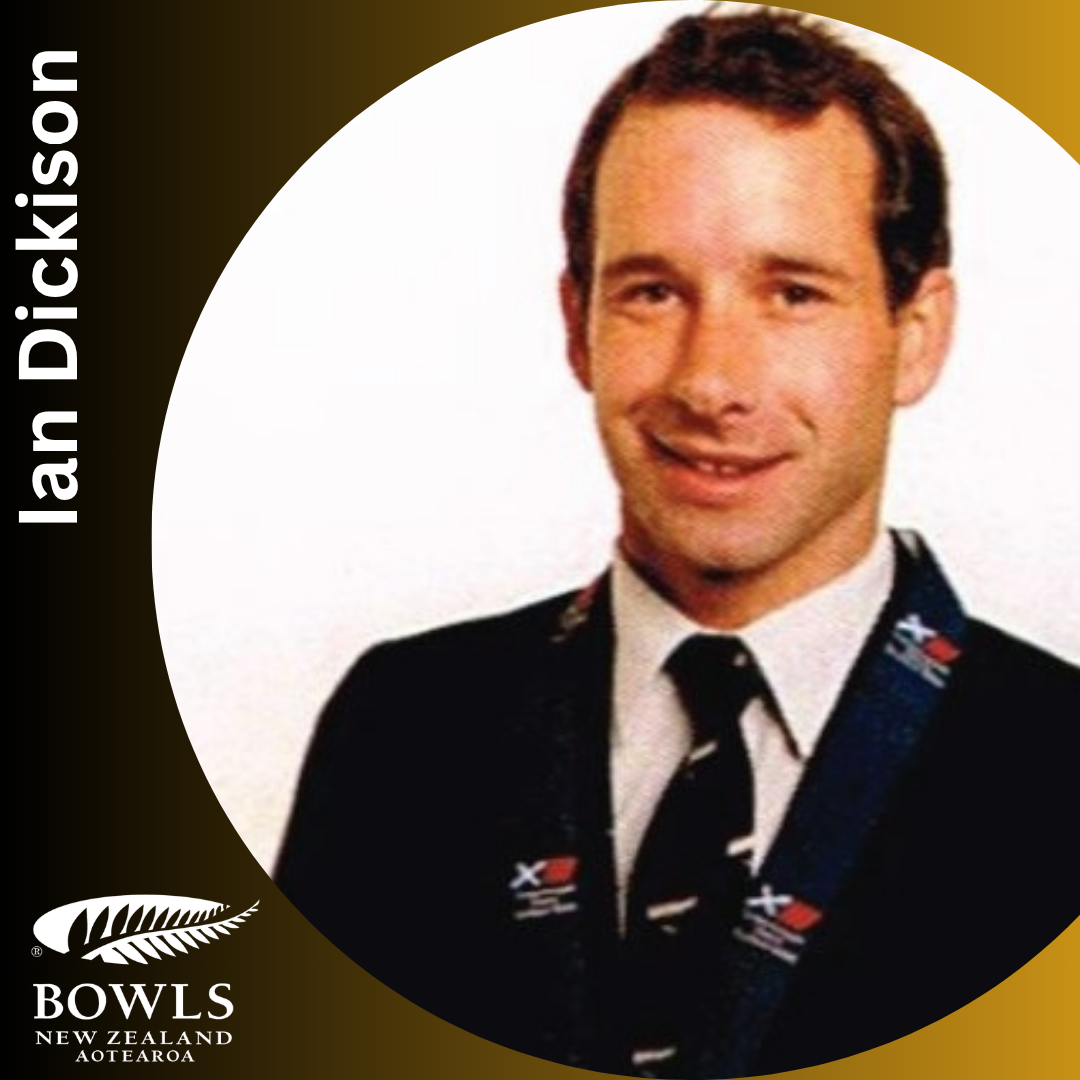
A skilful and well thought of bowler, he represented his centre for some 13 years prior to moving to live in Australia.
With his ability to win in both the Northern and Southern Hemispheres he demonstrated that he is a world-class player.
Ian earned some 12 clubs titles at Kaikorai and 11 centre titles.
He was a finalist in the Halberg Sportsman of the Year in1986.
As well as his gold medal winning performances he also won a silver medal in the fours at the World Bowls championships in 1988.
National Open and International Titles
National Singles: 1985
National Pairs: 1981
Commonwealth Games 1986: Gold Medal in Singles
World Bowls 1988: Gold Medal in Triples
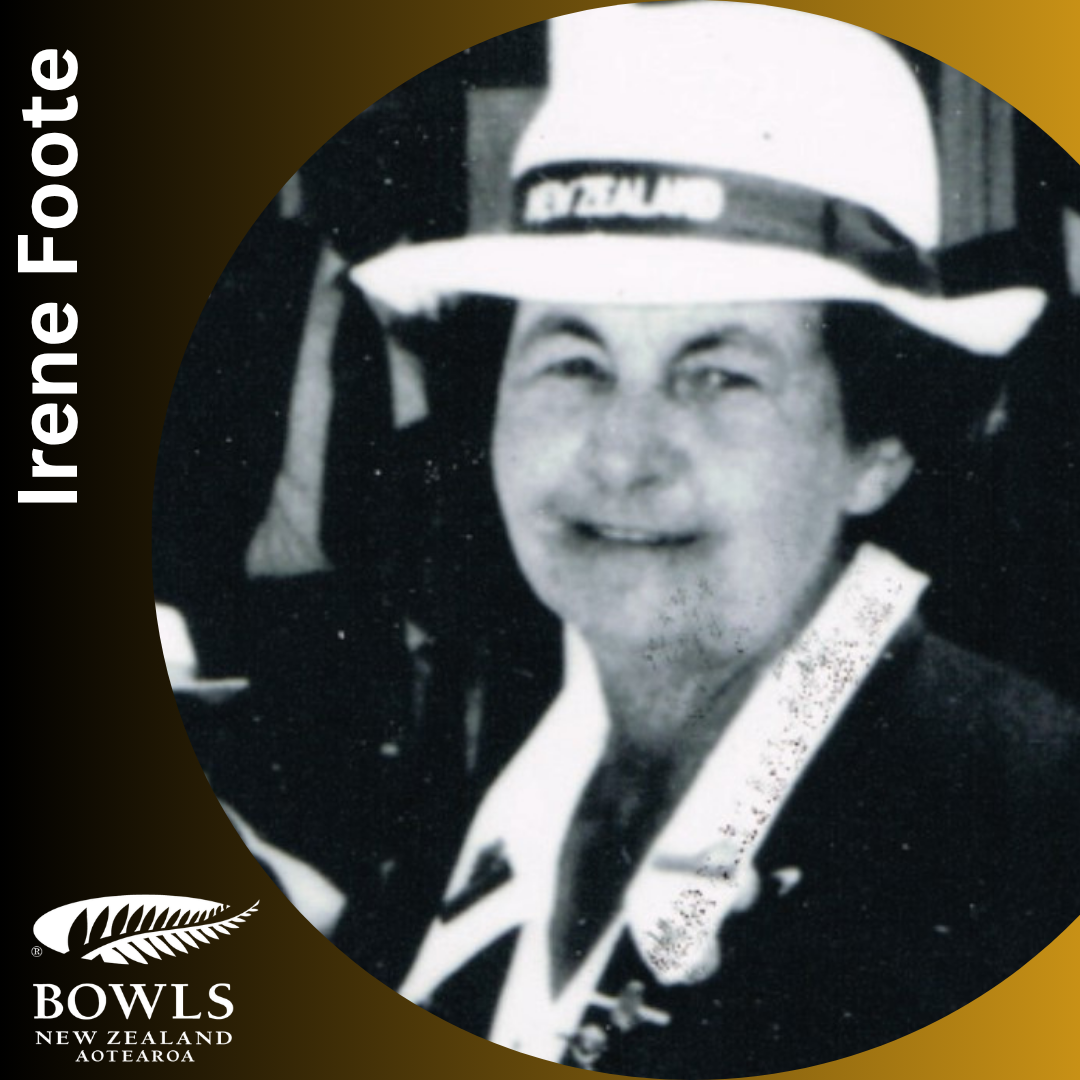
In total she collected 15 centre titles at Thames Valley and Bay of Plenty.
A unique performance was earning her New Zealand Gold Star by winning 5 champion of champion singles titles.
National Open and International Titles
National Champion of Champions Singles: 1965, 1973, 1975, 1977, 1981
World Bowls 1973: Gold medal in Fours
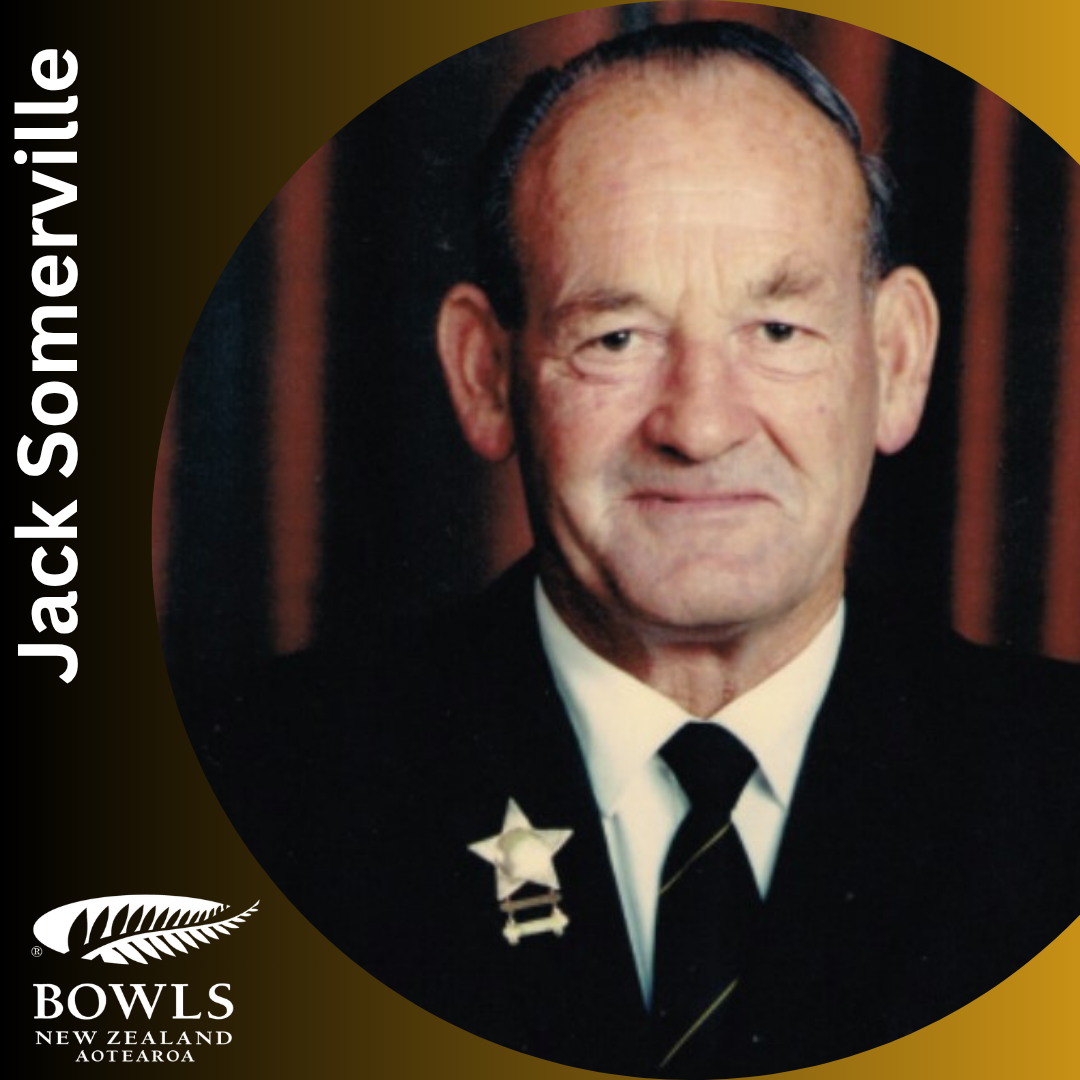
Between the two clubs he won 42 club titles and was awarded a Waikato Centre Gold Star and three bars.
A jovial fellow and a bit of a hard case, he was a great team man probably best remembered for his accuracy on the drive.
National Open and International Titles
National Fours: 1971, 1985, 1986
Commonwealth Games 1974: Gold Medal in Fours

Jan won eight national events between 1997 and 2013.
Her international career spanned a similar period and was littered with medals.
Embodying the same sportsmanship and exemplary attitude that her mother Millie displayed on the green, Jan is a legend in her own right and has made an indelible mark on the sport of lawn bowls.
National Open and International Titles
National Singles: 2010
National Fours: 1997, 2001, 2002,
World Bowls 2000: Gold Medal in the Fours
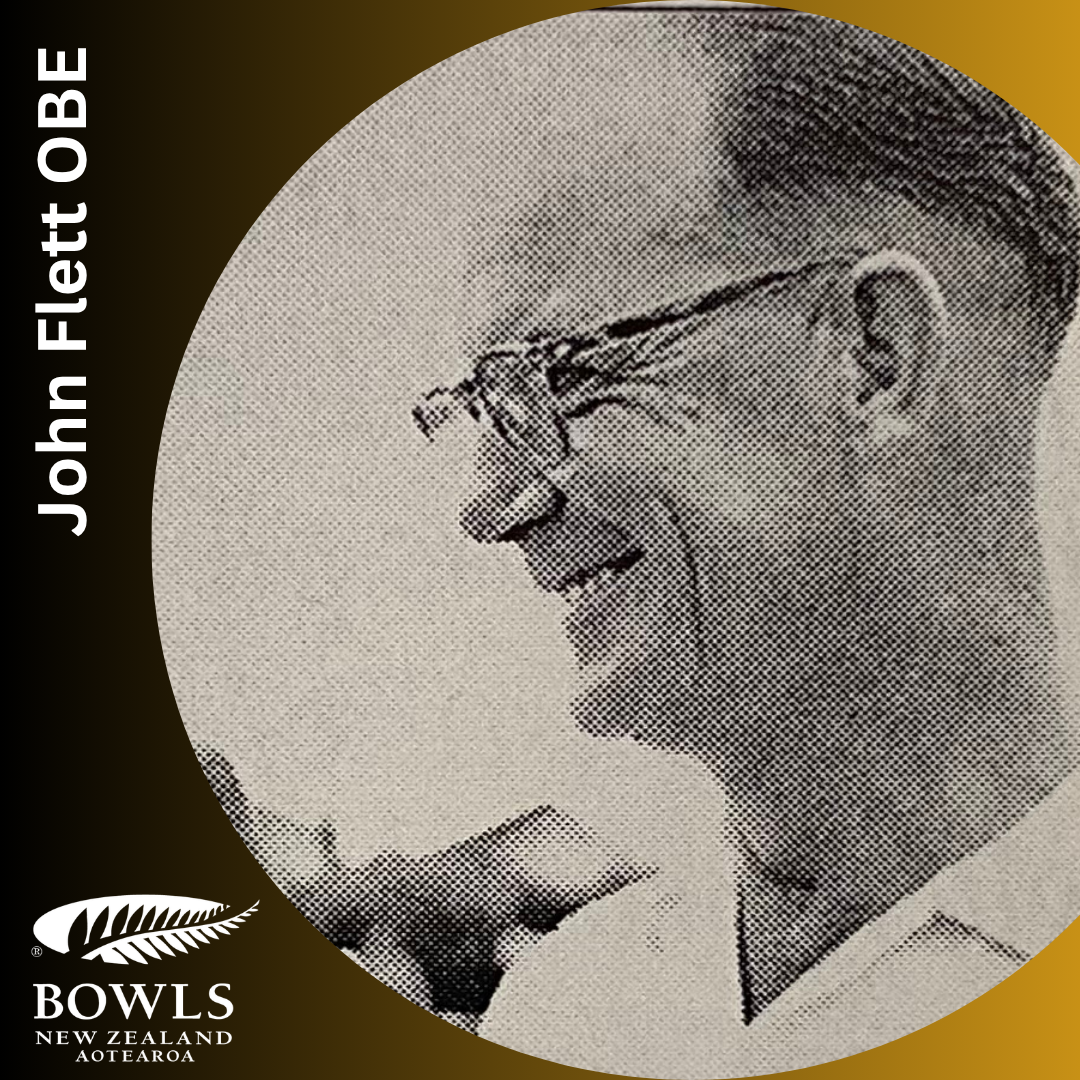
He was an accomplished player, who won the New Zealand pairs in 1963 with Selwyn Jolly.
Flett was also the Catalyst behind the still popular Auckland junior winter coaching- having convened a meeting with Percy Jones,Ted Pilkington, Doug Verral and George Alley in 1974.
From these beginnings, Flett moved on to become the national director of junior coaching in New Zealand for a number of years.
He also became the President of the New Zealand Bowling Association in 1977.
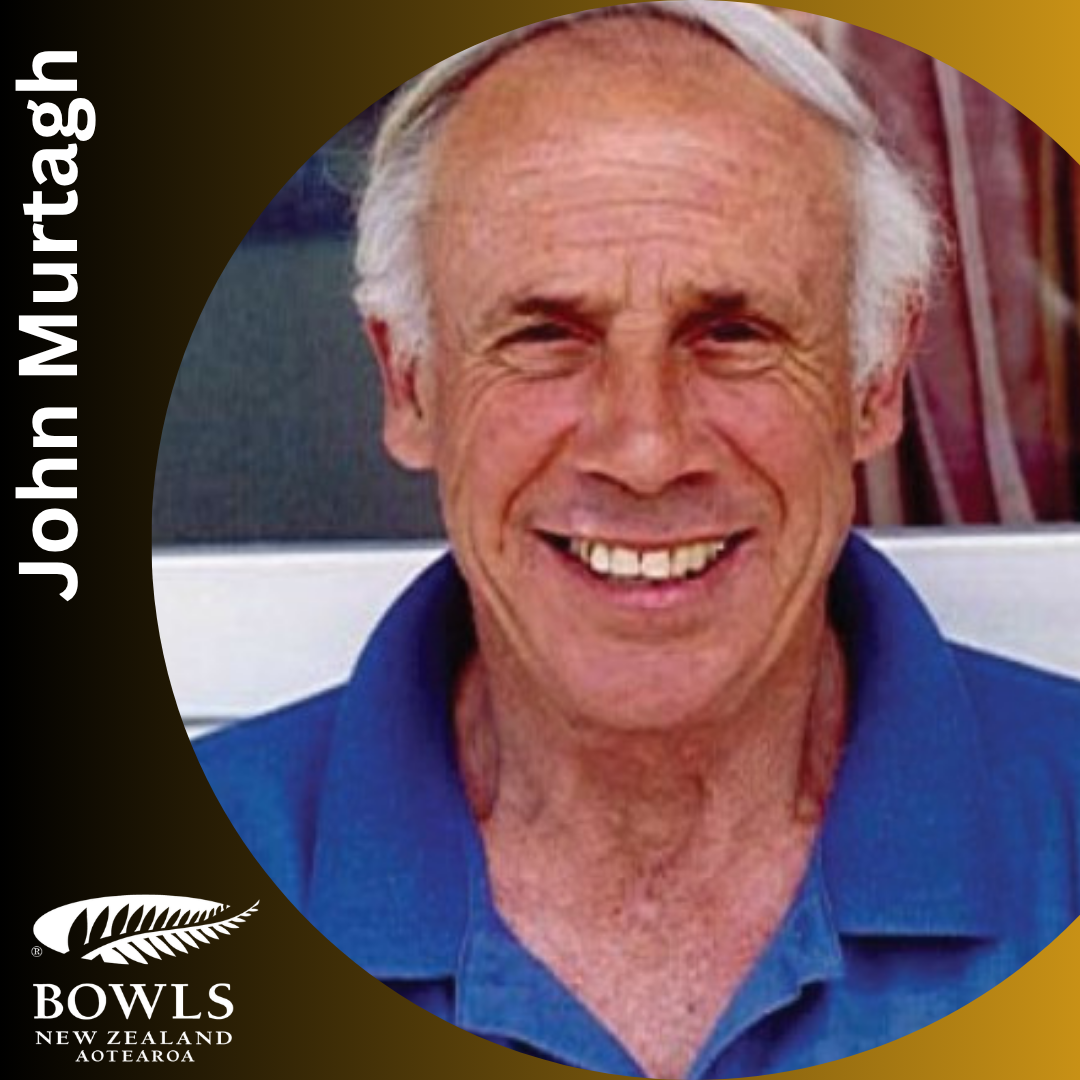
While John was a very competent bowler, having won 7 club titles, awarded both a Taranaki and New Zealand Gold Star, and represented New Zealand seven times, his great contribution to the sport was in the field of coaching.
He became the National Director of Coaching in 1986 and the National Coach in 1990.
He relinquished both positions in 2000 when he was appointed the National coach to the emerging bowling nation of Brunei.
During his period as Director of Coaching he established a coaching pathway integrating Bowls New Zealand coaching levels with Coaching New Zealand levels, putting bowls coaching on the same path as other major sports regimes.
National Open and International Titles
National Singles: 1980
National Pairs: 1971
National Fours: 1972; 1974
National C of C Singles: 1986
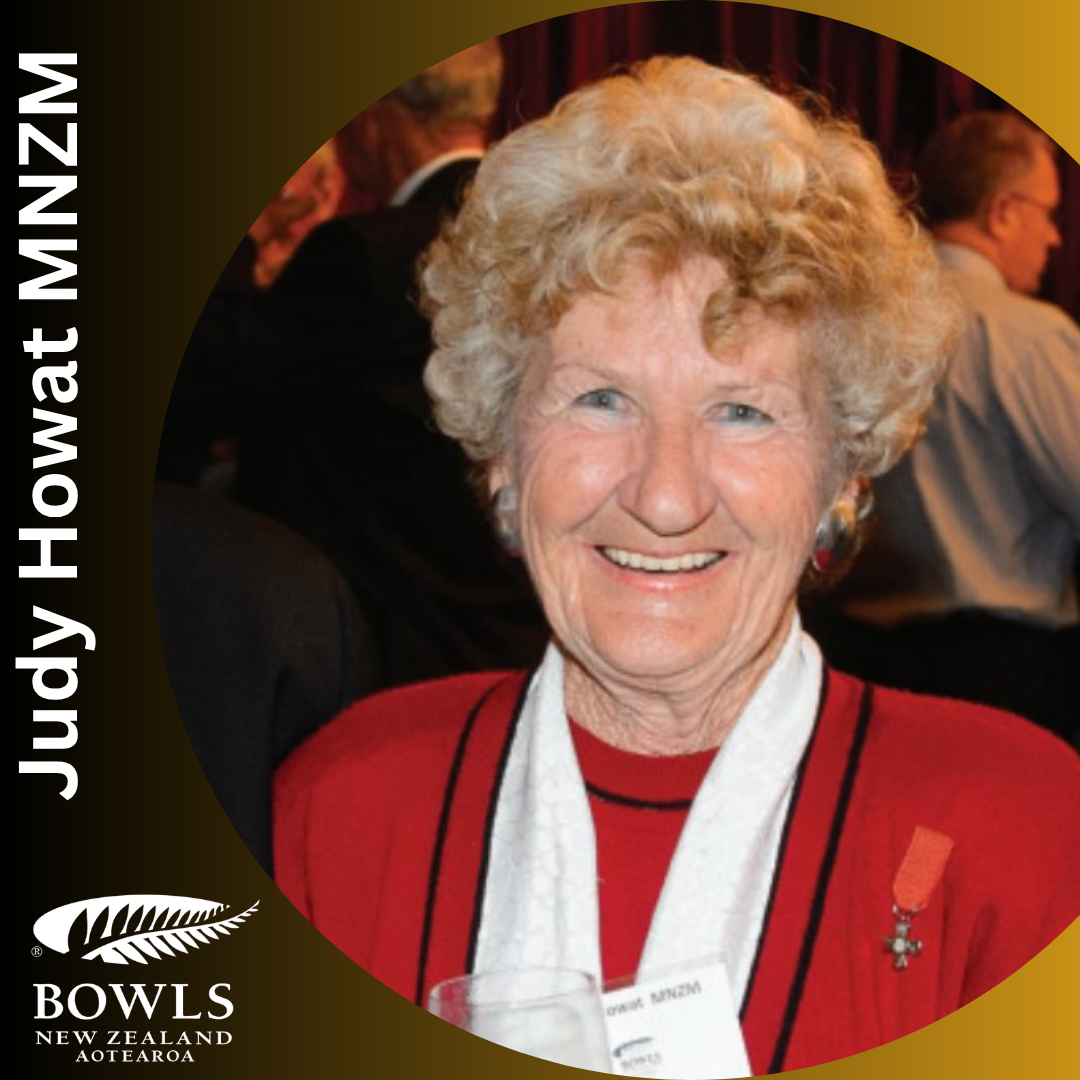
As well as being heavily involved in playing the game she has also been active in administration as Secretary and President as well as Green Superintendent for both her clubs.
She was awarded the MNZM for service to bowls in 2005and was inducted into the Wellington Legends of Sport in 2013.
She has won in excess of 76 club titles and 47 centre titles from four centres including Gold Stars in both Wellington and Kapiti Centres.
In World Bowls competitions she won silver in the pairs in1988 and in the fours in 1992.
National Open and International titles
National Singles: 1988
National Pairs: 1999
National Fours: 2000
National C of C Singles: 1989, 1991, 1992
Commonwealth Games 1990: Gold medal in Pairs
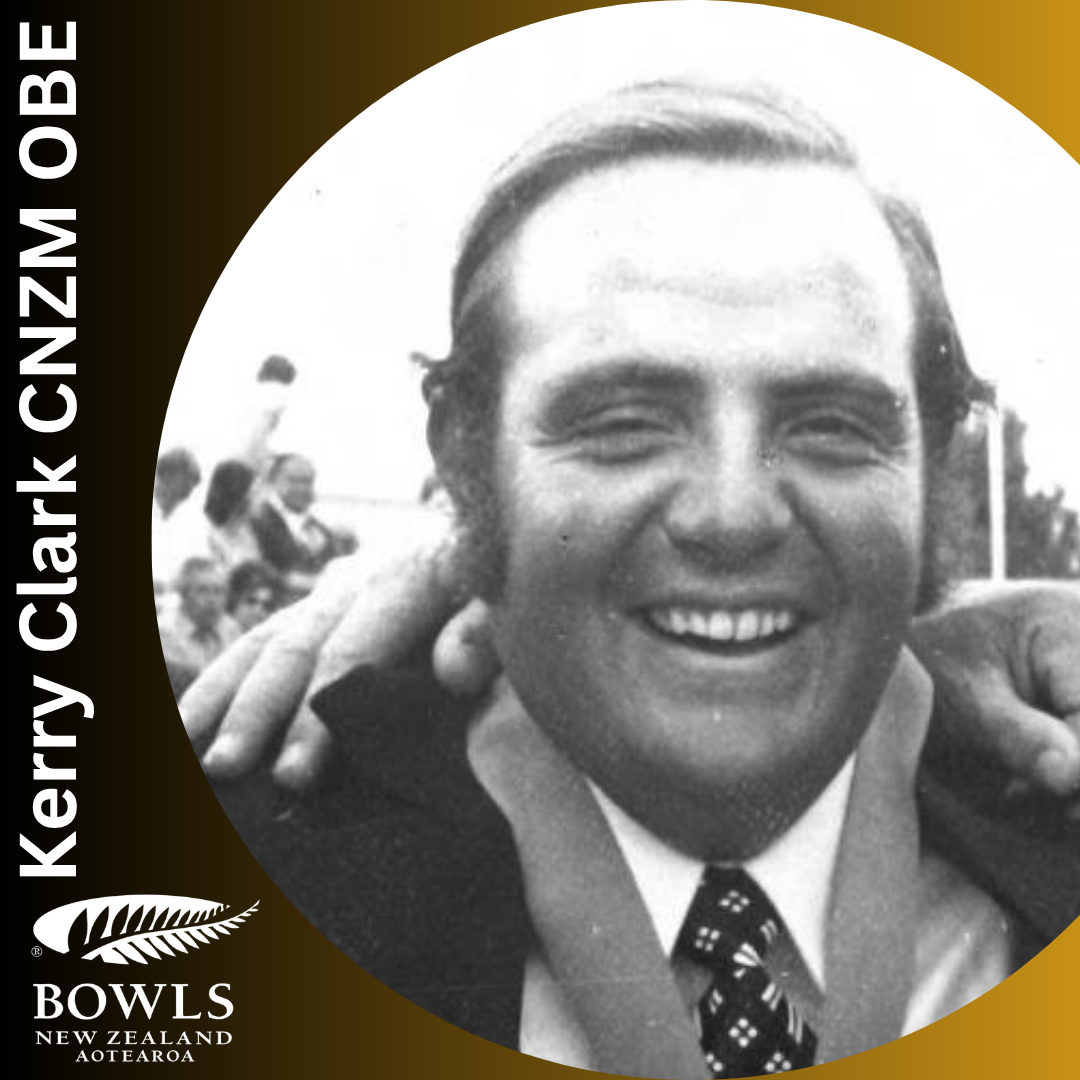
He was born in Cromwell in 1949 and began playing bowls as a12-year-old.
Clark first represented New Zealand at the 1972 world championships in Worthing, England, where he and Bob McDonald finished 6th in the pairs, posting a record of nine wins and six losses. In the fours thatyear, he teamed with Phil Skoglund, Bill MacArthur and Bruce Sinclair. The New Zealanders finished 7th.
At the 1976 world champs at Johannesburg, Clark finished 5thin the singles and 8th in the pairs with Vic Sellars.
His great moment as a player came at the 1974 Christchurch Commonwealth Games, when he teamed with Dave Baldwin, Jack Somerville and Gordon Jolly to win the fours gold medal. The consistent New Zealanders thrived on the atmosphere at the Woolston Workingmen's Club venue, and compiled a record of 10 wins and two losses to finish with 20 points.
They edged out Australia and Scotland for the medals,despite being beaten by Australia 33-11 early in the tournament. In the fina round, New Zealand delivered when they needed to, scoring a thumping 33-9 win over defending champions Hong Kong, while Australia came unstuck against Papua New Guinea.
Clark was back at the Commonwealth Games in 1978, this time as New Zealand's singles representative. In a particularly strength sapping tournament, he recorded nine wins and five losses to finish 4th. A narrow 21-18loss to Canada in the second-last match may well have cost him a medal.
The burly Clark made his final appearance for New Zealand as a player in 1980, and then turned his attention to administration and became one of New Zealand's most noted sports officials.
From 1982-86, Clark was the convener of the national men's selection panel, and was heavily involved in the organisation of the 1988 world bowls championship in Auckland. He also served as president of the International Bowling Board for two years.
When the New Zealand men's and women's bowls associations amalgamated to form Bowls New Zealand in 1996, Clark was appointed as that body's inaugural chief executive, a position he filled with distinction for many years.
Clark became chair of the World Bowls laws committee in2004, and also chaired the organising committee of the 2008 world bowls championship in Christchurch.
He chaired the New Zealand Sports Turf Institute from1997-2011, and was the World Bowls technical delegate for the 2014 Glasgow Commonwealth Games. He also chaired the organising committee of the 2016 world championship in Christchurch.
Clark was a long-serving trustee of the Halberg Disability Foundation from 1996, and was made a life trustee in 2016.
In the 1989, Clark was awarded an OBE and in 2017 a CNZM. In2013, he was an inaugural inductee into the Bowls New Zealand Hall of Fame. He was awarded the Order of Merit by the Commonwealth Games Federation at its General Assembly in 2018 for services to bowls.
National Open and International Titles
National Fours: 1977
Commonwealth Games 1974: Gold Medal in Fours
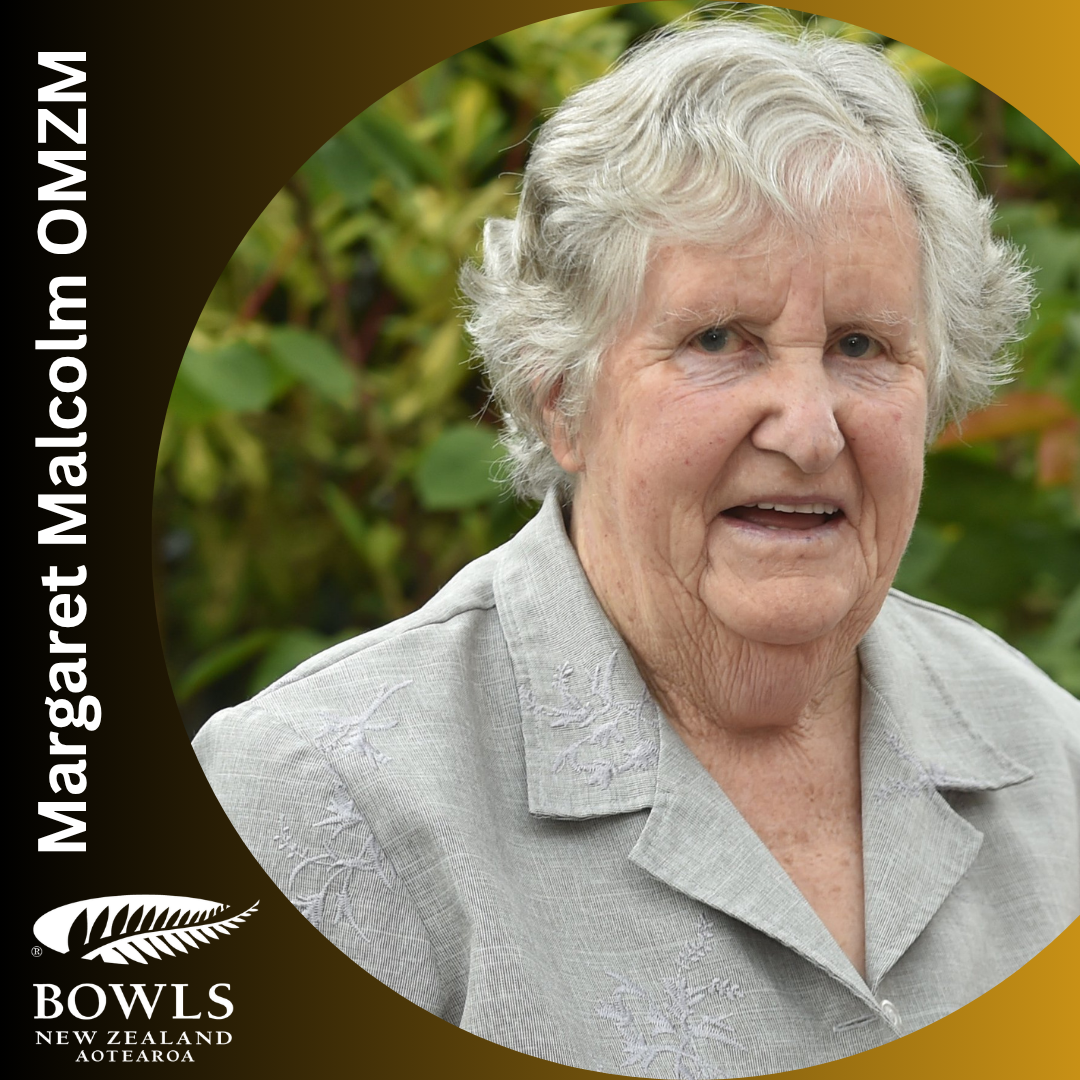
She joined 40 or so other Kiwi lawn bowls legends … the likes of Brassey, Skoglund and Belliss, … and Wilkie, Castle and Khan ... in receiving the ultimate accolade that the New Zealand bowls community can bestow.
“When I rang her up to tell her about the news,” says Bowls New Zealand Vice President, Jan Tucker, “Her husband, Bruce, answered the phone. There was stunned silence at the other end. And when he told Margaret, she wept. They were both so overwhelmed.”
Jan’s known Margaret for over 30 years. “She’s an institution at the Port Chalmers Bowling Club, where’s she’s played for nearly40 years,” says Jan. “In fact she’s an institution in Port Chalmers itself. She was born here. She’s been involved in rugby here,basketball here, cricket here, and of course bowls here.”
“Her husband Bruce is also an institution in Port Chalmers. Yet somehow they’ve both managed to find the time to bring up five children ‘in Port’.”
Margaret’s done just about anything and everything at the Port Chalmers Bowling Club. Not to mention anything and everything for the Otago Women’s Bowling Association (and Bowls Dunedin after amalgamation). Margaret has also done a heck of a lot at national level(see below).
“It would be hard to find anyone who’s given more service to the game of lawn bowls,” adds Jan. “and been still able to play a very sharp game of bowls at the same time.”
Margaret has 40 club titles to her name. She’s nabbed11 Centre titles. And although a National title has eluded her, she played in the Four that were runners-up in 2004.
It was both these contributions to the game ... her contribution as an outstanding administrator coupled with her contribution as a bowls athlete, that made her a candidate for the Hall of Fame.
The Bowls New Zealand Hall of Fame doesn’t only induct the best of the best of our lawn bowls athletes, but the best of the best of those who have contributed to the game generally. “I don’t know Margaret personally,” observed Bowls New Zealand Chief Executive, Mark Cameron, “But I’ve heard much about Margaret’s contribution to the game. Her induction is well-deserved.”
Mark Cameron joined Bowls New Zealand President Mark O’Connor, Vice-President Jan Tucker, Dunedin City Council Mayor Aaron Hawkins,Ward Councillor Steve Waller and more than 50 players past and present at the Port Chalmers Bowling Club last week in a ceremony inducting Margaret into the Hall.
Margaret’s no stranger to being feted for her achievements –in 2004 she received the Order of New Zealand Medal for her services to bowls and back in 1990 the Otago Rugby Football Union made her “Woman of the Year’.
“For me, Margaret’s most remarkable achievement was the work she did before, during and after amalgamation in 1996,” says Jan. “It seems difficult to imagine looking back now, but they were turbulent years …there was a lot of very strong opinion from both men and women, both supporting and opposing amalgamation. Margaret did a lot of work settling both men and women down, and getting them to work together.”
“Along with other women in the Centre like Margaret Grubb and Donella O’Dea, she helped break down what was a pretty fuddy-duddy game at the time with all its rules and regulations.”
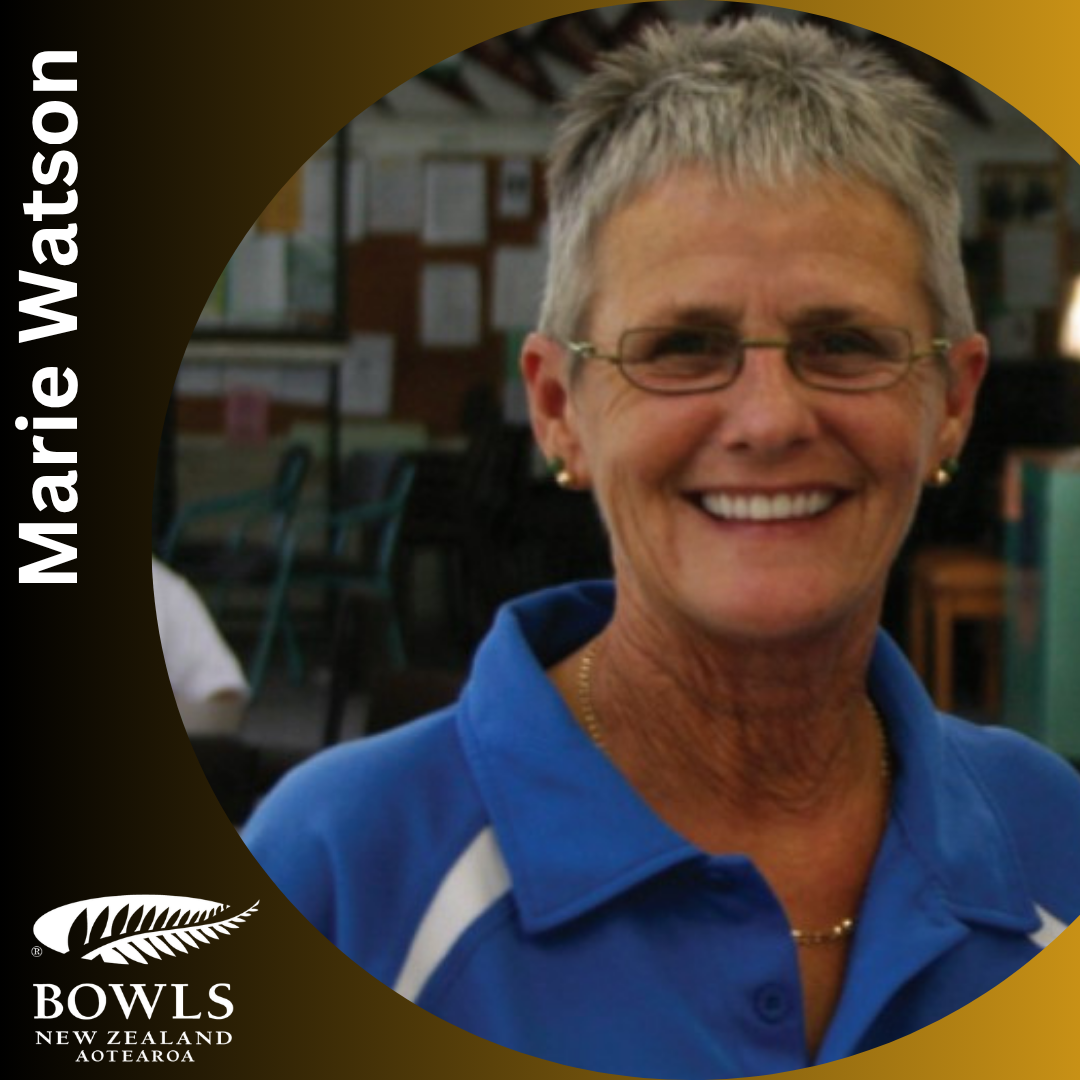
She has been a very personable and top class player over many years who is well regarded by her peers.
She has won many titles at her clubs and in excess of 50Centre titles.
She is one of a small group of players whom have represented New Zealand in both the Indoor and Outdoor Codes.
As well as her Commonwealth Games success she also won silver and bronze in the fours at World championships.
National Open and International Titles
National Singles: 1996, 1997, 1999, 2003
National Pairs: 1987
National Fours: 1995
National Mixed Pairs: 2007, 2008
Commonwealth Games 1990: Gold Medal in Pairs
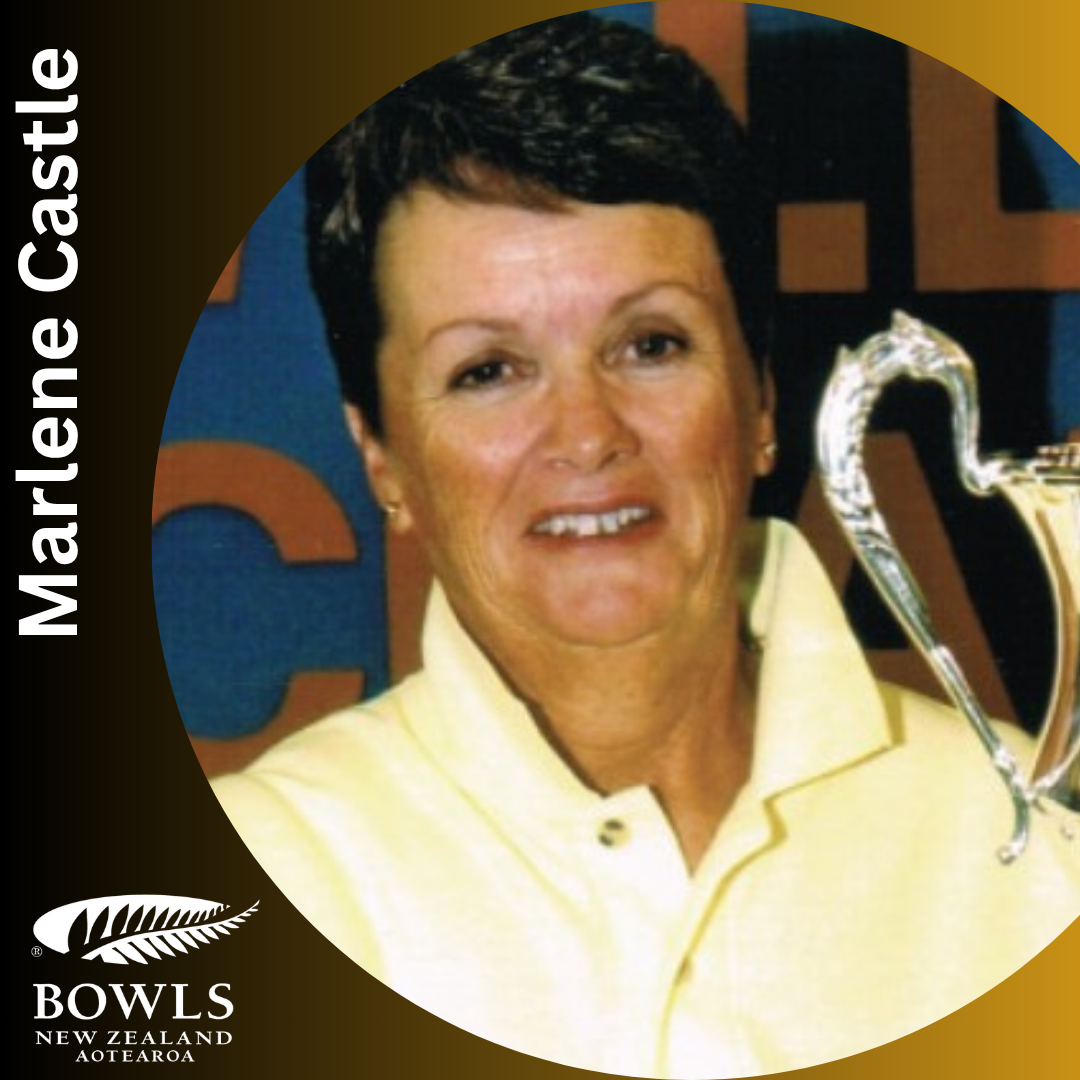
She became a dominant force in bowls in the Auckland area from her very first year in the sport demonstrating the determination and concentration required to become a champion.
She has won in excess of 31 club titles and 16 centre titles and was a 7 time winner of the national super bowls competition.
In both 2000 and 2001 she was a finalist in the Halberg Awards Sportswoman of the Year category.
Unfortunate never to have won a gold medal in top international competitions she was nevertheless the winner of 7 medals,Commonwealth Games silver and bronze in fours and bronze in singles and in World Bowls silver and bronze in both fours and triples.
National Open and International Titles
National Pairs: 2001
National Fours: 1999
National C of C Singles: 1999, 2000


105A Jervois Road, Herne Bay
Auckland, New Zealand


